Defensible Space


Your first defense against wildfire is to create and maintain a defensible space around your home. This does not mean your landscape must be barren.

Defensible space is an area around a structure where fuels and vegetation are treated, cleared or reduced to slow the spread of wildfire toward the structure. It also reduces the chance of a structure fire moving from the building to the surrounding forest. Defensible space also provides room for firefighters to do their jobs. Your house is more likely to withstand a wildfire if grasses, brush, trees and other common forest fuels are managed to reduce a fire’s intensity. The following are a few key steps to creating a defensible zone, but is not a comprehensive list.

Actively manage your roof. Clean roof and gutters of pine needles and leaves at least twice a year to eliminate an ignition source for potential fires.

Stack firewood away from your house. Locate firewood at least 15 feet uphill from your home. Do not stack firewood under the deck.

Remove unhealthy vegetation. Trees and shrubs that are stressed, diseased, dead or dying should be removed so that they do not become a fuel source for potential fires.

Create defensible space on flat ground a minimum of 70 – 75 feet around a home. Increase this distance if the structure is located on a slope.

Thin out continuous tree and brush (shrub) cover around structures. Remove flammable vegetation from within the initial 15 feet around structures.

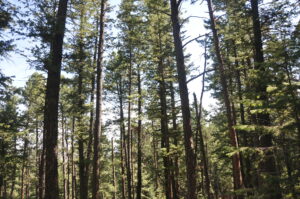
Beyond the initial 15 feet, thin trees to achieve a 10- to 12- foot crown spacing. Occasionally, clumps of two or three trees are acceptable for a more natural appearance, if additional space surrounds them.

Mow grasses and weeds to a height of six inches or less for a distance of 30 feet from all structures.

Prune tree branches within the defensible space up to a height of 10 feet above ground.

Dispose of all slash and debris left from thinning by either chipping, hauling away or piling and burning. Contact your local fire department or local CSFS forester for burning restrictions and/or assistance.

Remove shrubs and small trees or other potential ladder fuels from beneath large trees. Left in place, these fuels can carry a ground fire into tree crowns.

Trim any branches extending over roofs, and remove branches within 15 feet of chimneys.

Clean pine needles, leaves and other debris from roofs and gutters. This eliminates an ignition source for firebrands, especially during hot, dry weather.

Stack firewood and woodpiles at least 30 feet from any structure. Make sure they are uphill or on the same level as structures, and clear away flammable vegetation from within 10 feet of these woodpiles.

Place liquefied petroleum gas (LPG) containers at least 30 feet from structures. Clear anything flammable, including vegetation from within 10 feet of all tanks.

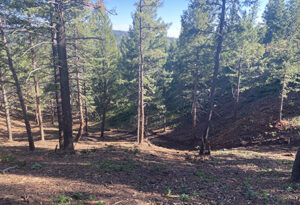
Before and After Defensible Space Pictures
before after

Learn more about defensible space (96 KB PDF), or review our fact sheet:

Creating Wildfire-Defensible Zones (205 KB PDF)