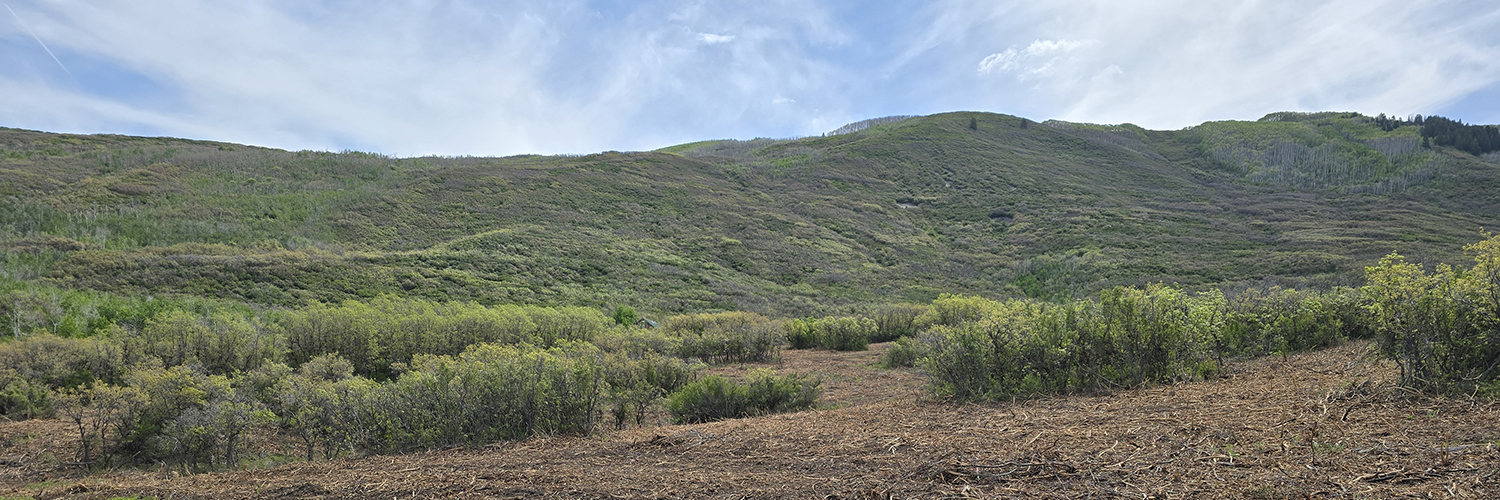
Contractors removed overgrown Gambel oak and serviceberry vegetation in the Coon Creek Estates neighborhood in Mesa County, reducing the amount of fuel available in the case of a wildfire. This project also promotes the growth of healthier, more diverse vegetation that provides forage and cover for deer and elk as well as an improved seed source for birds and other wildlife. Photo: Hallie Flynn, CSFS
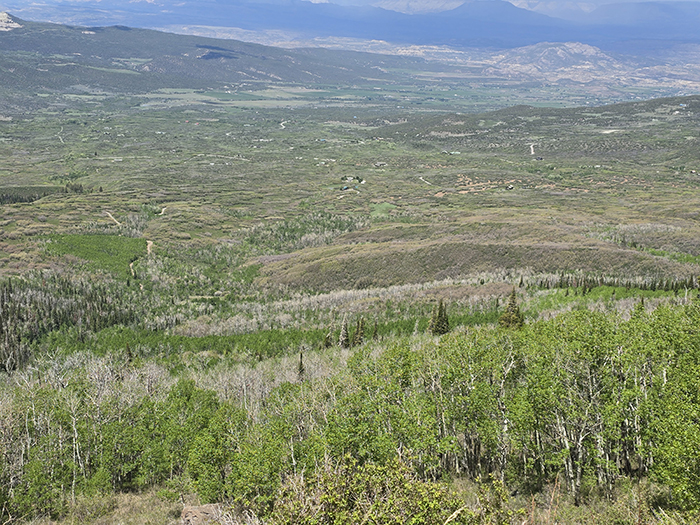
Colorado has 24 million acres of forests, but those acres look vastly different depending on where you are in the state. In lower elevations of Mesa County (home of Grand Junction), piñon-juniper woodlands dominate, while mixed conifer forests grow at higher elevations. But connecting these two forest types, you’ll often find thickets of Gambel oak and serviceberry. This shrubby vegetation grows dense, making it difficult for wildlife to travel through and easy for wildfire to spread.
In June 2025, the Colorado State Forest Service worked with private landowners in Coon Creek Estates to break up these horizontal fuels that can make a wildfire spread quickly and intensely.
Video production: Amy Bulger, CSFS; Drone pilot: Bill Wolf, CSFS
Building on previous success
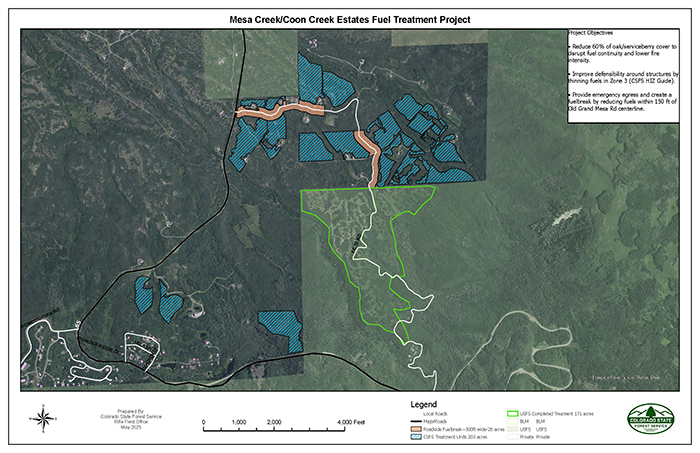
Next to the neighborhood, the U.S. Forest Service recently completed the Mesa Creek Good Neighbor Authority forest thinning project funded by Ute Water Conservancy District. So, it made sense to thin out the Gambel oak and serviceberry on private lands to make the entire landscape more resilient to wildfire.
Forester Hallie Flynn in the CSFS Rifle Field Office wrote and oversaw the forest treatment plan, and Vegetation Management West completed the work. The first phase of the project initially planned to cover 139 acres, but strong landowner engagement and efficient project planning reduced the cost-per-acre, stretching project dollars further. By the end of the project, Flynn expects to be able to double the number of acres across 25 separate privately owned parcels, removing dense fuels and reducing wildfire risk for the community.
Large masticators broke the dense Gambel oak and serviceberry into a patchwork of islands. This technique keeps refuges intact for wildlife like wild turkey, mule deer and black bear and reduces the amount of vegetation available to fuel a wildfire. Excessive contiguous growth of Gambel oak and serviceberry increase the threat of a dangerous wildfire that could endanger homes and lives.
Improving safety for residents and firefighters
The second phase of the project created a fuelbreak along a couple miles of Old Grand Mesa Road. This 300-foot-wide clearing next to the road provides a safer evacuation route for residents in case of a fire and improves accessibility for firefighters and equipment. The Mesa County Sheriff’s Office used the masticator purchased with 2023 Forest Restoration and Wildfire Risk Mitigation grant funds to complete this part of the project.
Key partners
Like most effective projects, this wildfire mitigation project relied on numerous partners for its success.
Mesa County Sheriff’s Office provided staff and equipment for the fuelbreak treatment and acted as the fiscal agent.
U.S. Forest Service grant funds made the work possible.
Participating landowners and residents off of Old Grand Mesa Road to Golden Drive paid for the treatments and will be reimbursed at a rate of 75%. Perhaps even more important is the maintenance work landowners have done to pile coarse woody debris for later mastication or burning as well as mowing and hand-cutting stobs in rocky areas. This post-treatment work is critical for long-term success.
Vegetation Management West performed the work on the private property parcels.
Gambel oak and serviceberry can create dense thickets that provide substantial amounts of fuel for a wildfire to spread rapidly and intensely. Foresters created a plan to remove overgrowth and leave islands of vegetation, reducing the likelihood of a wildfire spreading horizontally along the landscape. Photo: Bill Wolf, CSFS
A masticator grinds up trees and vegetation, leaving mulch behind. Photo: Hallie Flynn, CSFS
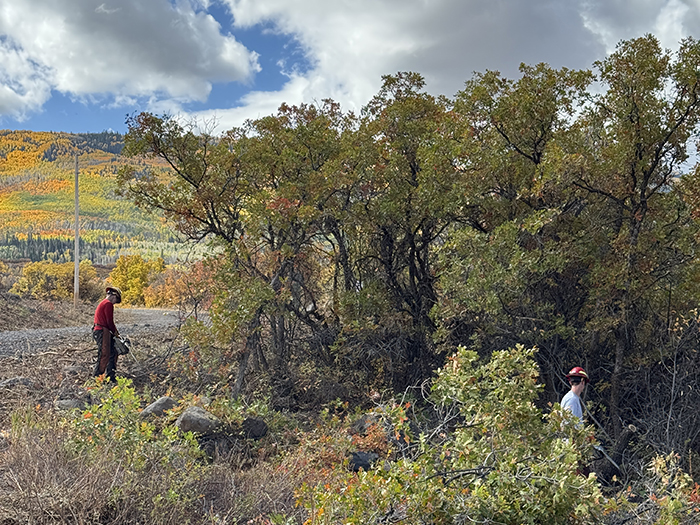
Wildland firefighters from Mesa County Sheriff’s Office continue work on the fuelbreak on Sept. 30, 2025, removing shrubs and other vegetation using chainsaws. The MCSO has funded this portion of the project 100% and has been an invaluable partner in reducing the risk of wildfire along Old Grand Mesa Road. Photo: Hallie Flynn, CSFS
This fuel reduction project builds on previous thinning work completed by the USFS and funded by Ute Water. Building on adjacent treatments helps reduce the wildfire risk in the entire landscape. The acreage of the Mesa Creek/Coon Creek project on private lands has more than doubled from its initial scope. Map: CSFS
CSFS foresters work with many partners and private landowners to improve the health of forests and reduce the risk of wildfire throughout Colorado. This project strategically built on earlier work by the USFS.