

What Is EAB?
An Aggressive, Destructive Pest
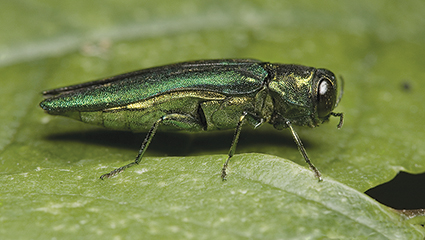
Emerald ash borer (EAB) is an insect native to Asia. It was unintentionally introduced into North America during the 1990s. The specific timeframe is unknown due to the years it takes for trees to show symptoms from an EAB infestation.
EAB attacks and kills all true ash species native to North America, including green, white, black and blue ash, and their cultivars, including Autumn Purple ash, a popular white ash variety in Colorado. Although rare in Colorado, white fringetree (Chionanthus virginicus) also has been documented as susceptible to EAB.
This pest kills both stressed and healthy trees and is so aggressive that ash trees may die within two years after they become infested. However, depending on the tree’s health, it is possible for EAB to infest an ash tree for up to four years before visible signs of decline in the tree occur.
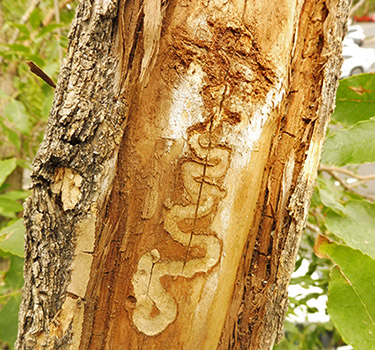
The half-inch-long, dark metallic green adult beetles are active from late May through July, as they feed on ash tree leaves and females lay eggs on the bark. After the eggs hatch on the bark, the resulting EAB larvae tunnel into the bark of the tree but not all the way into the wood. They live between the bark and the wood and feed on the phloem and outer sapwood layers of the tree, producing galleries that girdle and ultimately kill the tree within two to four years. These expanding S-shaped galleries can be viewed when the bark is removed.
In late May, the EAB adults emerge from infested trees and typically fly up to a half-mile to feed and lay eggs on new trees. Distribution of the pest over much longer distances is possible due to people transporting infested ash firewood, logs, nursery stock or other wood products.
A Threat to Colorado’s Urban and Community Trees
EAB now poses a serious threat to Colorado’s urban and community forests, where ash trees comprise an estimated 15% or more of all trees. The Denver Metro area alone has approximately 1.5 million ash trees, which provide an estimated $82 million annually in services including stormwater mitigation, energy savings and increased property values.
For communities on Colorado’s Front Range and northeast plains, it’s only a matter of time before this pest will arrive. Without ongoing treatment, any infested ash trees will die.