Alert: Mountain Pine Beetle Outbreak
We’re monitoring a mountain pine beetle outbreak on the Front Range of Colorado. Access key resources for managing mountain pine beetles in your trees and stay informed about the outbreak.

Franktown Field Office

Serving Arapahoe, Douglas, Elbert and Lincoln counties

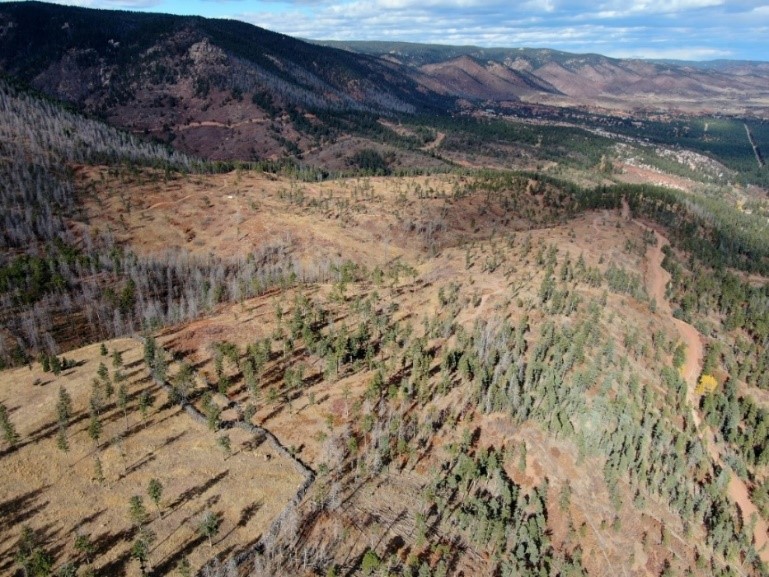
A 35 acre portion of the larger 276 Acre Moonridge Sprucewood Fuels Mitigation Project west of Sedalia.

Forestry assistance, wildfire mitigation expertise, and outreach and education

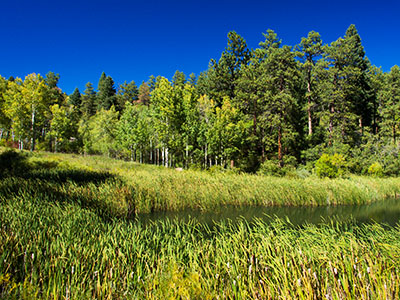
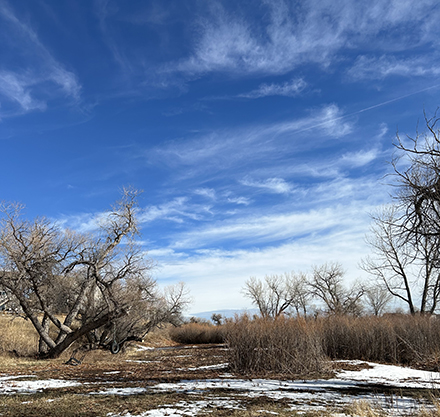
Primary forest types within the Franktown Field Office area include riparian corridors with plains cottonwood and willows at the lowest elevations, transitioning to Gambel oak and ponderosa pine woodlands. Moving higher in elevation, mixed conifer forests become primary with a mix of Douglas-fir and ponderosa pine with scattered pockets of quaking aspen, blue spruce and limber pine.

Major geographic features include the Rampart Range, South Platte River corridor, Roxborough State Park hogbacks and Castlewood Canyon State Park. Reservoirs at Chatfield and Cherry Creek State Parks provide critical water storage and recreation opportunities and extending out to the rolling grasslands of Elbert and Lincoln counties. Elevation ranges from 4,500 feet in the grasslands of eastern Lincoln County to the 9,836-foot peak of Thunder Butte in Douglas County. Most of our work occurs in forests and woodlands between 5,500 and 9,000 feet.

Notable wildfires in the area include one of Colorado’s largest at the time, the Hayman Fire in 2002 (138,000 acres). This fire caused significant destruction and post-fire disturbance to critical water infrastructure within the Upper South Platte Watershed, which provides drinking water to millions of residents along the Front Range.

Meet the staff

  • Spencer Weston – Supervisory Forester
  • Joe Gray – Lead Forester
  • Nathan Wallace – Forester
  • Currie Nowell – Forester

Contact us

PO Box 485
2068 N. Hwy. 83
Franktown, CO 80116
(303) 660-9625
CSFS_Franktown@mail.colostate.edu

The office is north of the intersection of Highway 86 and Highway 83 in Franktown (see map at right).

Franktown Field Office location

Urban and community forestry

Overview

Key components of our community forestry program include:

  • Helping support local tree boards
  • Conducting street and park tree inventories
  • Conducting insect and disease assessments
  • Assisting with tree planting and tree care needs
  • Offering technical assistance on how to plant and maintain trees

Caring for our trees not only protects our investment, but provides benefits for the future. People often choose community trees for their beauty and ability to provide shade. Trees benefit communities by providing urban forests that many times include social attachment to individual trees. They also improve air quality, control erosion, moderate the sun’s effects and attract wildlife.

Tree City USA

The National Arbor Day Foundation (NADF) encourages tree planting and environmental stewardship through educational programs. Two NADF programs that are utilized on the Franktown Field Office are Tree City USA and Arbor Day celebrations. For a community to become a Tree City USA, four requirements must be met to receive this honor:

  1. Have a tree board or city department that is responsible for the trees
  2. A tree care ordinance
  3. A community forestry program with an annual budget of at least $2 per capita
  4. An Arbor Day observance and proclamation

If your community is interested in becoming a Tree City USA, please contact the Franktown Field Office or visit the National Arbor Day Foundation.

As of 2014, there are 10 communities in the Franktown area that are recognized as being a Tree City USA: Aurora, Buckley AFB, Castle Rock, Cherry Hills Village, Elizabeth, Greenwood Village, Highlands Ranch, Limon, Lone Tree and Parker.

Arbor Day

A day to celebrate the planting of trees was the idea of J. Sterling Morton, who promoted tree planting while employed for the Nebraska Territory. The very first Arbor Day was celebrated in Nebraska in 1872 and was inaugurated by planting over 1 million trees in just one day. According to Colorado Revised Statues (C.R.S. 24-11-104): The third Friday in April each year shall be set apart and known as “Arbor Day” to be observed by the people of this state in the planting of forest trees for the benefit and adornment of public and private grounds, places, and ways in such other efforts and undertakings as shall in harmony with the general character of the day established.

To learn more about Arbor Day and how to incorporate a celebration in your community, visit the Arbor Day Foundation.

Proper tree selection is important when replacing or adding trees to your urban forest. A tree’s shape, characteristics, growth rate and size at maturity should be considered when choosing a location for it.

You have selected your tree or shrub and the location has been chosen, now comes the planting. This is where the plant will be located for the rest of its life! It is very important to plant at the right depth and remove as much of the packaging the tree came in as possible.

Following these steps will give your tree or shrub the opportunity for a long and healthy life for your family to enjoy.

Urban trees and shrubs require pruning to help make them strong and healthy, and to prevent any damage during strong storms. They also require adequate watering and general care. The following information can help you make the right choices and use the proper techniques when caring for your trees and shrubs:

Insects and diseases

Common concerns

As soon as you notice any abnormality in your tree’s appearance, you must begin careful analysis to gain an understanding of the problem. By examining the specific symptoms of damage and understanding their causes, you can make a reasonable diagnosis of the problem and select the proper treatment using this guide to Systematic Plant Evaluation.

If your questions cannot be resolved with the information provided in the guide or the links below, please contact the Franktown Field Office at (303) 660-9625.

Foresters are available to conduct site visits to look at specific insect or disease concerns on your property. These visits are by appointment only, and have an associated service fee. To schedule an appointment please call the Franktown Field Office.

Ponderosa Pine
Dwarf mistletoe
Pine sawfly mature larvae. Photo: W. Ciesla
Douglas-fir
Aspen
Gambel Oak

Other Insects of Concern

There are non-insect and disease-related factors that affect trees and create signs/symptoms that can be confused with insect and disease activities. Below are common disorders/damage that affect conifers on the district:

The Annual Report on the Health of Colorado’s Forests provides an overview of insect and disease conditions in all of the state’s forests.

The annual survey is led, coordinated and funded by the U.S. Forest Service. A small fixed-wing aircraft is flown between 1,000 to 1,500 feet above the treetops while surveyors mark on a map the location, number and identity of trees affected by insects or diseases. The CSFS has assisted in the aerial survey since the 1970s and began playing a larger role in 1997.

For more information about the state aerial survey, visit U.S. Forest Service Rocky Mountain Region.

Forestry services

Forest management and stewardship

The Franktown Field Office’s forest management programs provide a variety of services to Colorado landowners. We are dedicated to providing quality assistance to landowners in Arapahoe, Douglas, Elbert and Lincoln counties by helping them achieve their resource management goals.

Our goal is to help landowners enhance, protect and manage their forest property for optimum health now and for future generations.

Services include assistance with the following programs:

  • Forest management plans
  • Thinning projects for forest health and restoration
  • Fuels reduction and modification to reduce wildfire hazards
  • Post-fire rehabilitation
  • Insect and disease surveys and detection
  • “Sick tree” calls – site visits for both large- and small-acreage properties
  • Conservation tree planting plans
  • Seedling tree advice
  • Advice and assistance in coordinating forest contractors and consultants
  • Public information and education
  • Workshops for forest landowners, communities and homeowner associations
    franktown-masticator
    A masticator used on fuels treatment project

As a Colorado landowner, you can enhance the value of your forestland by being dedicated and concerned about forest management issues and wildfire.

Managing your land will not only increase the value and health of your resource, but will also enhance and protect wildlife habitat, soil and water quality, and ecological diversity.

Please contact the Franktown Field Office if you have any questions about managing your forest property.

Forest Ag

The Forest Agriculture Classification Program allows forested lands that meet specific specifications to have similar property tax valuation as that of traditional agricultural lands. The Forest Ag program is voluntary and landowners must meet annual requirements for eligibility. These include:

  1. The landowner must perform forest management activities to produce tangible wood products for the primary purpose of obtaining a monetary profit. Tangible wood products include transplants, Christmas trees and boughs, sawlogs, posts, poles and firewood.
  2. The landowner must have at least 40 forested acres.
  3. The landowner must submit a Colorado State Forest Service-approved forest management plan that is prepared by a professional forester or natural resources professional.
  4. Landowners must annually submit (1) a request for inspection, (2) an inspection fee, (3) an accomplishment report, and (4) an annual work plan for the following year. The enrolled property must be inspected annually by a CSFS forester.

More information can be found on the CSFS Forest Ag web page or contact the Franktown Field Office.

Tree Farm

A tree farm is a tract of privately owned land that is voluntarily dedicated by its owner to the growing of renewable resources, while protecting environmental benefits and increasing public understanding of sustainable forestry.

More information can be found on the American Tree Farm System Colorado website, or by contacting the Franktown Field Office.

The program is designed to encourage landowners to plant new forests, promote reforestation, establish effective windbreaks that reduce erosion, and enhance wildlife habitat. Trees sold through the program are for conservation purposes.

Order forms are available in mid-November with tree delivery during the first part of May. Tree ordering and delivery is done through local conservation district or extension offices.

If your property is in Arapahoe, Douglas, Elbert or Lincoln county and you would like to be placed on the mailing list, contact your local conservation district or county extension office listed below to be placed on a mailing list for tree order forms and additional information.

Arapahoe County

Douglas County

Elbert County

Lincoln County

Franktown foresters are available to assist you with questions you have about the program or help you with selecting the right trees for your property. Call us at (303) 660-9625, and we will be happy to answer your questions.

The Franktown Field Office retains a list of local contractors who have asked to be on this list. We do not endorse any contractor and provide the listing only as a service to homeowners. Homeowners are advised to compare services, prices and references to find the contractor best suited for their particular needs. For additional information, see our Choosing a Forestry Contractor and Consultant (282 KB PDF) publication.

For the most current contractor list, please visit the Franktown Field Office main page and look for the links under the News & Resources section, or contact the Franktown Field Office at (303) 660-9625.

Environmental Quality Incentive Program

The Environmental Quality Incentive Program (EQIP) provides a source of funding and technical assistance through the Natural Resource Conservation Service (NRCS) to support forest management activities.

For NRCS office contact information, please visit the Natural Resources Conservation Service website.

For other funding opportunities, please visit the CSFS Grants & Funding page.

Wildfire mitigation and education

Protect your home, property and forest

Homeowners can take steps to protect their property and reduce the risk of a wildfire destroying their home. Preventive measures include clearing excess fuel, creating defensible space around their home and using FireWise practices.

A forester can assist you in determining the wildfire hazards around your home and on your forested property. These visits are by appointment only and have an associated service fee. To schedule an appointment, please call the Franktown Field Office at (303) 660-9625.

Due to the arid climate and fire-dependent forests in Colorado, many homeowners and landowners may be particularly vulnerable to wildfires. It is important to keep this threat in mind when buying or building a home.

Two factors have emerged as the primary determinants of a home’s ability to survive wildfires: having fire-resistant roofing, siding and porch materials, and creating a wildfire defensible zone around the home. This is known as the Home Ignition Zone. Fire-resistant roofing material should be rated Class A when building a home in or near forests or grasslands. Avoid flammable roof materials such as wood or shake shingles at all costs.

Fire embers can travel a mile or more in front of the main body of fire. Your home’s construction can be a KEY factor in its ability to survive a wildfire. The CSFS offers a publication on FireWise Construction: Site Design & Building Materials (1.3 MB PDF) for more information on FireWise Construction.

Defensible space is the natural and landscaped area around a home or other structure that has been modified to reduce fire hazard. This area gives your home a fighting chance against an approaching wildfire. Creating defensible space also reduces the chance of a structure fire spreading to the surrounding forest and other homes.

Defensible Space is a three-zone system starting at your home and extending to the property boundary.

More detailed information for each zone can be found in Home Ignition Zone Guide (2.7 MB PDF) and by calling the Franktown Field Office for more assistance.

Zone 1 is where vital vegetation modification takes place. The width of Zone 1 is 0-5 feet, measured from the edge of the structure. The width can vary in size depending on the percent of the surrounding slope. As slope becomes steeper, the vegetation must be mitigated at a greater distance to compensate for the heat and wind moving up the slope. Remove as many trees and shrubs as possible and keep grasses less than six inches tall in this zone.

Zone 2 is an area of fuel reduction designed to diminish the intensity (wind, heat, smoke) of any wildfire approaching the structure. The width of Zone 2 depends on the slope around the structure. Typically, the zone should extend at least 5-30 feet from all structures (this includes zone one). Within this zone, trees and shrubs should be thinned so there is at least a 10-foot space between the edges of tree crowns. Ladder fuels, such as small shrubs, young trees and very low-growing branches, should be removed from beneath remaining trees.

Before and after photos show how Gambel oak was removed around the perimeter of a home
These before-and-after photos show defensible space after dense Gambel oak was removed near a home in the Roxborough community in Douglas County. This project was funded, in part, through a prior FRWRM grant.

In Douglas and Elbert counties, Gambel oak occurs in dense, contiguous stands acting as ladder fuels and increases fire hazards. Treatment recommendations are shown in the Gambel oak management publication.

Zone 3 is the remaining area between Zone 2 to at least 100 feet and extending out to the property boundary. In this zone, the forest should be managed for general forest health. Any fuel removed from this zone will further protect the home in the case of a wildfire.

Maintenance of defensible space is critical to its effectiveness. At least annually, homeowners should mow grasses within the first 30 feet of the home; clean leaves, needles and debris from gutters, roof valleys and under decks; and prune back new growth and dead branches to ensure proper spacing of vegetation in all zones. Gambel oak re-sprouts vigorously, and also should be mowed annually within Zones 1 and 2.

The main goal of defensible space is for a wildfire to encounter Zone 2, slow down its rate of movement and decrease its intensity, then encounter Zone 1 where combustible vegetation is minimal. Therefore, the wildfire cannot make direct contact with the structure and the wind will move the wildfire without too much destruction to the vegetation. Defensible space is not a one time activity; it must be maintained by the homeowner every year as vegetation continues to grow.

Additional Information on making your property more defensible:

Community Wildfire Protection Plans or CWPPs brings together diverse local interests to discuss their mutual concern for public safety, community sustainability and natural resources. It offers a positive, solution-oriented environment in which to address challenges such as local firefighting capability, the need for defensible space around homes and subdivisions, and where and how to prioritize land management on both federal and non-federal land.

Many communities in the Franktown area are actively implementing CWPPs. Visit the Colorado CWPP web page to view the CWPPs in Arapahoe, Douglas and Elbert counties. Please contact the Franktown Field Office at (303) 660-9625 for more information.

Franktown Field Office News

aerial view of an alpine forested landscape

Partners Improve Forest Health Across Boundaries

Large-landscape projects in areas with multiple partners and stakeholders can be complicated. Learn how the Franktown Field Office’s leadership and collaboration with partners will result in treatment of approximately 700 acres, resulting in a substantially lower risk of wildfire for a rural community.

Type your address or the city or town where you live into the search field on this map.

Map powered by the Colorado Forest Atlas from the Colorado State Forest Service