


FORT COLLINS, Colo. – Colorado’s top forest health concern is a mountain pine beetle outbreak on the Front Range that has expanded by nearly 150% from 2024 to 2025, according to a Colorado State Forest Service report. The report shows the continued spread of mountain pine beetles and other forest insects during the second consecutive year of above-average temperatures and below-average precipitation.
Trees in forests across Colorado are stressed following a record warm winter and low snowpack, and infestations of bark beetles and western spruce budworm are expected to intensify and expand.
“It’s getting tough to be a tree in Colorado. Heat and drought are stressing our forests, turning many areas into tinderboxes and making it harder for trees to fight off bark beetles and other insects,” said Matt McCombs, state forester and director of the CSFS. “We can’t control the weather, but we can work together to lower the risks these outbreaks create, protect high-value trees and manage fuels.”
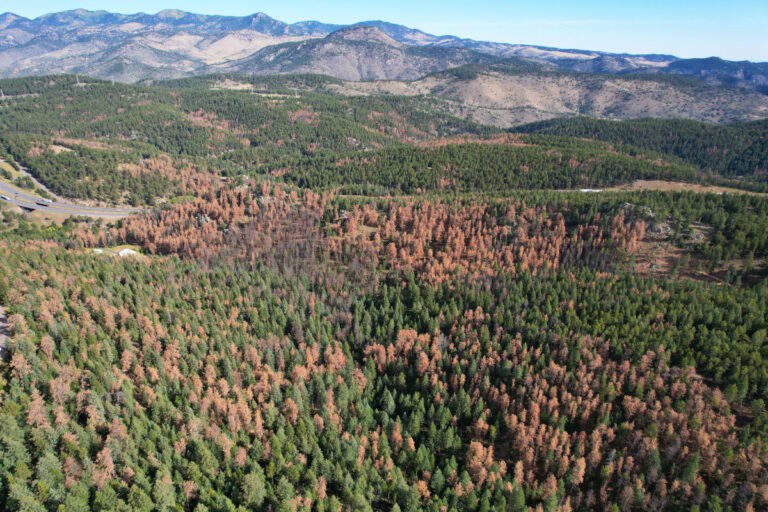
Trees killed by drought, insects or disease can potentially alter wildfire behavior should there be ignition from lightning or other sources. Bark beetle outbreaks like the one on the Front Range are killing trees in forests that already have a high risk for wildfire.
2025 key takeaways
The 2025 Report on the Health of Colorado’s Forests describes which insects and diseases are the biggest forest health issues in the state, with mountain pine beetle and emerald ash borer chief among them.
Aerial survey data from the USDA Forest Service and CSFS show that mountain pine beetles are spreading in ponderosa pine forests on the Front Range. These forests contain highly populated, high wildfire risk areas with many trees susceptible to this native insect. Mountain pine beetles impacted 5,544 acres of pine forests in a nine-county area of the Front Range in 2025, compared to 2,236 acres across this same area in 2024 – a 148% increase.
“What we’re seeing with mountain pine beetles along the Front Range isn’t cause for panic, but it is a reminder to stay vigilant and get to work,” McCombs said. “Using good science and strong partnerships, we can build forests and communities that are more resilient in the long run.”
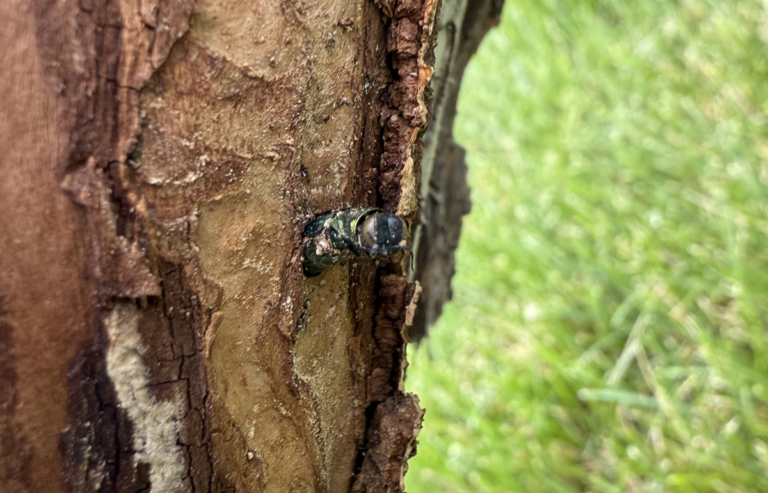
Emerald ash borer was discovered in six new cities and towns in 2025 – the most initial detections in a year for Colorado since it was first found in the state in 2013. This invasive insect kills all true ash species. About 15% of the trees in Colorado’s urban forests are ash, making emerald ash borer a major threat to trees in communities statewide.
Access resources and guidance for mountain pine beetle and emerald ash borer.
Other key takeaways from the report
- Western spruce budworm – the most widespread forest pest in 2024 – continues to cause extensive and intense damage to Douglas-fir and low-elevation mixed-conifer forests.
- Western balsam bark beetle – the deadliest forest pest in 2024 – remains active in high-elevation spruce-fir forests.
- Douglas-fir beetle continues to kill Douglas-fir trees in parts of Pitkin, Fremont and Teller counties and most counties in central and southern Colorado.
- Roundheaded pine beetle and associated native bark beetles are expanding in ponderosa pine forests in the southwestern reaches of Colorado.
- Mountain pine beetle continues to impact lodgepole pine in Gunnison County and forests in the Mosquito Range in Chaffee and Park counties, as well as areas of southwestern Colorado.
“The 2025 Report on the Health of Colorado’s Forests is timelier than ever,” said Dan Gibbs, executive director of the Colorado Department of Natural Resources. “Colorado’s forests are stressed after an unprecedented warm, dry winter and are prime for further spread of mountain pine beetles and other forest health issues, along with increased wildfire risk. However, in Colorado we are taking action through the launch of the Ponderosa Mountain Pine Beetle Task Force and bringing all available resources, experts and stakeholders together to prioritize our actions to make the best science-based decisions for the future of our forests and communities.”
Resources for a deeper dive into forest health
The 2025 report contains interactive maps and data for the public and land managers to see where insects are impacting forests. To complement the report, the CSFS published three Science & Data Bytes examining the outbreak of mountain pine beetles on the Front Range, with further analyses on forest conditions, wildfire impacts and semiochemical treatments.
Each year, the forest health report provides information to the Colorado General Assembly and residents of Colorado about the health and condition of forests across the state. Information for the report comes from an annual aerial forest health survey by the USFS and CSFS, as well as field inspections, CSFS contacts with forest landowners and special surveys.