Serving Custer, Fremont and Pueblo counties

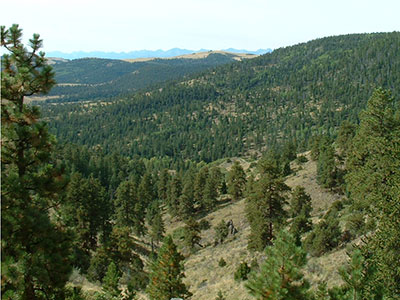
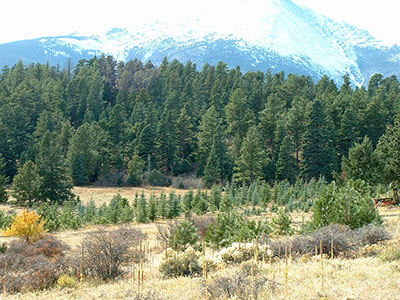
Waugh Mountain during autumn in the CSFS Canon City Field Office area

Forest management, wildfire mitigation, seedling tree sales, community forestry and education

We host an inventory forester responsible for conducting the Forest Inventory and Analysis (FIA) program in southeastern Colorado. We also provide facilities for the Colorado Department of Homeland Security, Division of Fire Prevention and Control (DFPC).

The Cañon City Field Office is the silvicultural lessee for state trust lands in our three-county area.
Meet the staff

Danny Schell – Supervisory Forester
Thomas Hatling – Forester
Lisa Clark – Accounting Technician
Nate Rausch – FIA Supervisory Forester
Andrew Reed – FIA Research Associate I

Contact us

515 McDaniel Boulevard
Cañon City, CO 81212
Directions to our office

(719) 275-6865
FAX: (719) 275-6853
[email protected]

 Cañon City Field Office location

Forestry services

Community forestry
The Cañon City Field Office provides landowners both inside and outside of city limits with technical forestry assistance, including insect and disease concerns, planting and caring for trees, wildland fire defensible space, etc.

We also provide assistance to local municipalities and schools with tree planting programs, Tree City USA designations and local Arbor Day celebrations.

Tree City USA

The Tree City USA® program, sponsored by the Arbor Day Foundation in cooperation with the USDA Forest Service and the National Association of State Foresters, provides direction, technical assistance, public attention, and national recognition for urban and community forestry programs in thousands of towns and cities that more than 135 million Americans call home.

The many benefits of being a Tree City include creating a framework for action, education, a positive public image and citizen pride.

Three municipalities on the Cañon City area are designated as Tree City USA communities:

  • Pueblo
  • Florence
  • Cañon City

Learn more about the Tree City USA program.

Arbor Day

A day to celebrate the planting of trees was the idea of J. Sterling Morton, who promoted tree planting while employed for the Nebraska Territory. The very first Arbor Day was celebrated in Nebraska in 1872 and was inaugurated by planting over a million trees in just one day.

According to Colorado Revised Statutes (C.R.S. 24-11-104): The third Friday in April each year shall be set apart and known as “Arbor Day,” to be observed by the people of this state in the planting of forest trees for the benefit and adornment of public and private grounds, places, and ways in such other efforts and undertakings as shall in harmony with the general character of the day established.

Learn much more about the Tree Planters’ Holiday and how you can incorporate an Arbor Day celebration in your community by visiting the Arbor Day Foundation.

Healthy forests allow for a diverse array of benefits. They provide habitat for many wildlife species, improve water quality, filter pollutants from water and air, enhance outdoor recreational activities, provide wood products and supply jobs that support local economies.

The foresters at the Cañon City Field Office are experienced in the art and science of managing forests for a variety of objectives. Often, management activities can achieve multiple objectives. Sound management typically begins with a good plan.

Our foresters can provide detailed forest inventories that they use to develop long-term stewardship plans, which are designed to meet the landowner’s objectives.

We can also develop planting plans for landowners who want to establish trees on their property.

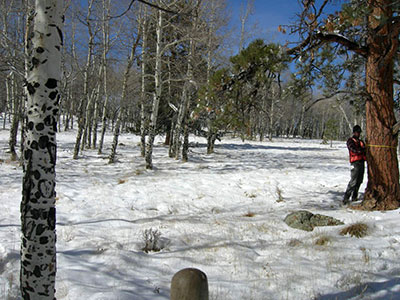
A forester conducting a forest inventory in the CSFS Canon City Field Office area
Forest inventories
A graphic of a CSFS management plan
Management plans
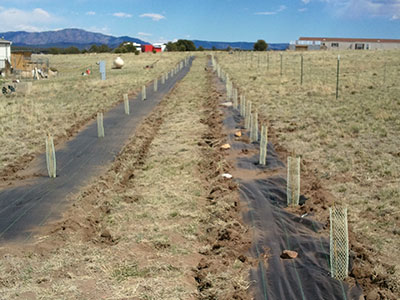
A tree planting operation in the CSFS Canon City Field Office area
Tree plantings

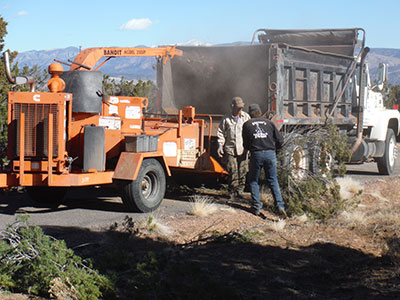
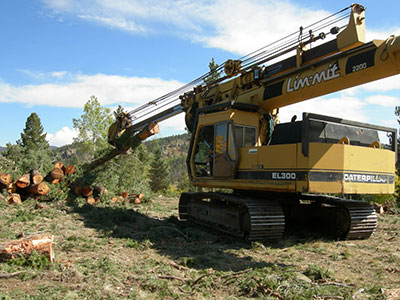
Forest management practices often involve the cutting and removal of trees to eliminate insects or disease, alleviate overcrowding, reduce wildfire danger, etc., in order to create the desired forest condition.

We frequently work with loggers and service contractors who implement the recommended forest practices. We can assist landowners in finding a reputable logger or contractor, draft a fair contract, and obtain a fair price for the service or payment for the value of wood products to be harvested.

We can also provide on-site administration of the work performed and guide the practice in a manner that will maintain the integrity of other resource values. We refer to this as using Best Management Practices (6.2 MB PDF).

Bear Basin
Bear Basin
Log Deck
Log deck
PMP After Treatment
PMP after treatment

The Cañon City Field Office also manages the sale of forest products on select state sections located within Fremont, Custer and Pueblo counties. We set up and administer sales of timber, commercial firewood, transplant stock and Christmas trees.

Please contact the CSFS Cañon City Field Office if you have a need for commercial quantities of forest products.

Forest Inventory and Analysis

Our office also provides facilities for the Forest Inventory and Analysis (FIA) Program. FIA is a nationwide program that collects data on a wide range of variables affecting forest health and structure.

The Cañon City FIA crew’s area of responsibility differs from the district’s region. It varies by year, but generally covers from the west side of the Sangre de Cristos, east to the border and the Highway 50 corridor, south to the border.

More information

Please visit the CSFS FIA Program.

Wildfires have been shaping western landscapes since before recorded history. Fire is a natural and often necessary component of most forest ecosystems.

Human activity and developments within the forest increases the potential for fire ignition and greatly expands the values placed at risk when wildfires occur. If you live in a suburban or rural development, you are most likely at some level of increased risk.

Many factors such as the amount, arrangement and type of vegetation present, terrain features, access, water availability, building materials, and type of construction used in developments (homes) all influence your level of risk.

How we can help you

Our foresters are also experienced wildland firefighters. We know how to reduce the risks you may face and improve your home’s chances of surviving a wildfire.

  • Home and property assessment of wildfire risks
  • Design and layout of defensible space, including selecting the best trees to keep
  • Assistance with finding a reputable contractor to thin trees and dispose of wood debris
  • Assistance with the development of a community-wide wildfire protection plan

Links

Insects and diseases can pose serious threats to a forest’s health. Our foresters monitor insect and disease activity and trends, and respond to emerging threats to our communities’ forests.

Insect and disease concerns

By properly identifying the tree’s species and examining the specific symptoms of damage, you can make a reasonable diagnosis of the problem and select the proper treatment using this guide to Systematic Plant Evaluation.

If your questions cannot be resolved with the information provided, please email the Cañon City Field Office or call us at (719) 275-6865. Our foresters are available for consultation regarding insect and disease concerns.

Statewide publication

Local insects and diseases

The following contains information on insect and disease concerns specific to our district, though not limited to these. Our Publications page and the field guide linked at the bottom of this page contain information on a wider range of insect and disease concerns.

Engelmann spruce

Douglas-fir and fir

White fir

Ponderosa pine

Piñon pine

Cottonwoods

Black walnut

Dwarf mistletoe

Adult spruce beetle. Photo: W. M. Ciesla
Western spruce budworm larvae feed on buds and current-year foliage of Douglas-firs, true firs and spruce trees. Photo: William M. Ciesla
Western spruce budworm larvae. Photo: W. M. Ciesla
Adult spruce beetle and eggs under the bark of an Engelmann spruce tree. Photo: Dan West, CSFS An adult spruce beetle and eggs underneath the bark of an Engelmann spruce tree. Photo: Dan West, CSFS
Adult spruce beetle and eggs. Photo: Dan West
Western tent caterpillar larvae. Photo: W.M. Ciesla
Western tent caterpillar larvae. Photo: W. M. Ciesla
Tent of western tent caterpillar. Photo: CSFS

Emerald ash borer

Emerald Ash BorerEmerald ash borer (EAB) is an invasive insect of Ash species and is native to Asia. First introduced in the Great Lakes Region, likely on shipping material, it has now spread throughout much of the east.
EAB in Colorado

In 2013, EAB was discovered in Boulder, Colorado. It was likely transported hundreds of miles on firewood material. This is a sound reminder to only buy and use firewood locally.

As of December 2019 EAB has been confirmed in unincorporated Larimer County and in the cities of Boulder, Gunbarrel, Longmont, Lafayette, Lyons, Superior, Broomfield and Westminster.

As the potential impact on Colorado’s urban forests and the services they provide are immense, it is important to stay informed on the subject. The following quick guide provides some important information on Emerald Ash Borer.


Field guide

The following field guide was created by the U.S. Forest Service. It is specific to the Rocky Mountains and can serve as a useful and comprehensive tool to help you identify insects and diseases of concern.

Resources

Type your address or the city or town where you live into the search field on this map.

Map powered by the Colorado Forest Atlas from the Colorado State Forest Service