Know how to identify a pine tree infested with mountain pine beetles
Fall is an ideal time for residents to check for the presence of mountain pine beetles in their pine trees, especially lodgepole, ponderosa and limber pines. Each year, these beetles take flight in late summer to look for new host trees. By fall, enough time has passed to see signs of infestation, but the weather is often warm and dry enough for outdoor walks.
Residents should look for these tell-tale signs and symptoms of mountain pine beetle infestation:
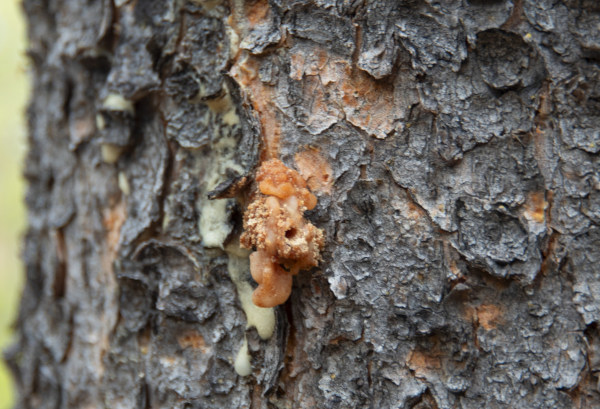
Popcorn-shaped masses of resin, called pitch tubes, on the trunk that may be brown, pink or white
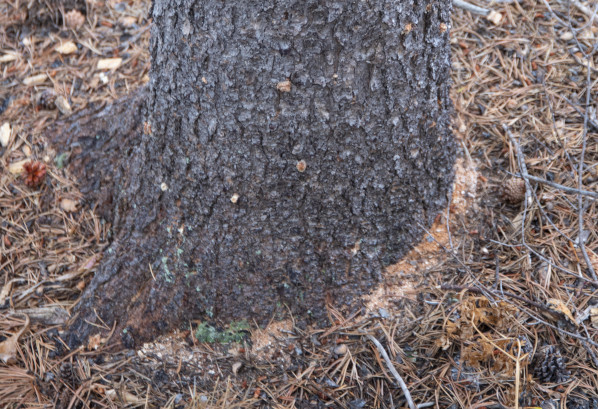
Boring dust in bark crevices and on the ground immediately adjacent to the tree’s base
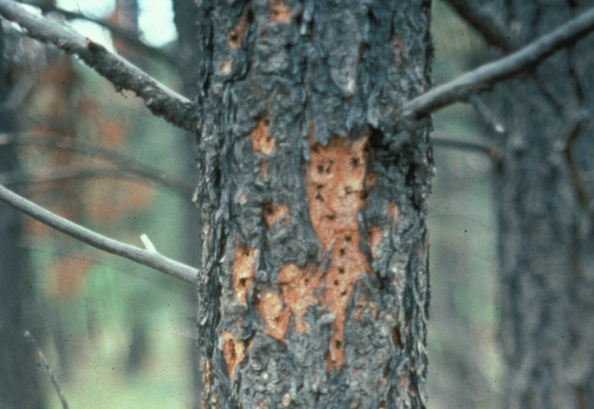
Woodpecker damage, where the birds have stripped portions of the bark in search of larvae, leaving accumulations of bark at the base of the tree
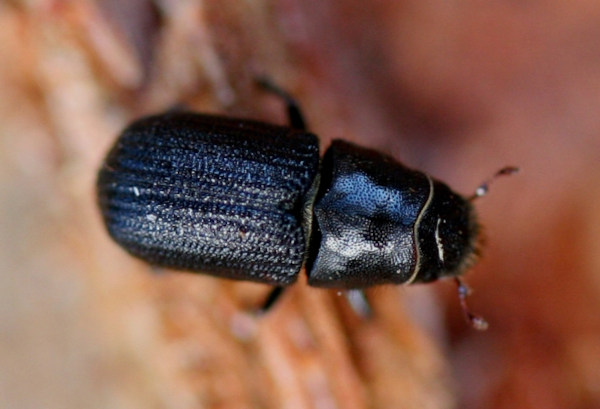
Presence of live mountain pine beetles (eggs, larvae, pupae and/or adults)
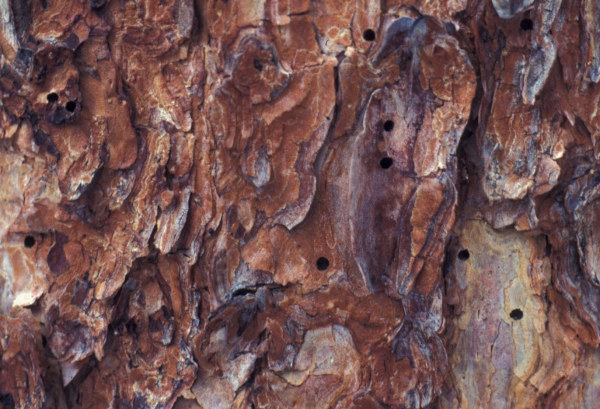
Exit holes on the bark’s surface where adult beetles have emerged
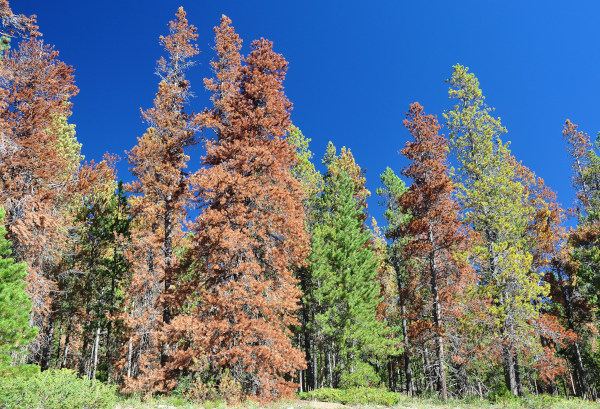
Foliage turning yellowish to reddish throughout the entire tree crown, which usually occurs eight to 10 months after a successful attack
Popcorn-shaped masses of resin, called “pitch tubes,” are found on the trunk where beetles tunneled into the bark. Pitch tubes may be brown, pink or white. Photo: Dan West, CSFS
Boring dust in bark crevices and on the ground immediately adjacent to the tree’s base is a sign that bark beetles entered the tree. Photo: Dan West, CSFS
The presence of live mountain pine beetles (eggs, larvae, pupae and/or adults) are a clear sign that a tree is infested. An adult is the size of a grain of rice. Photo: CSFS
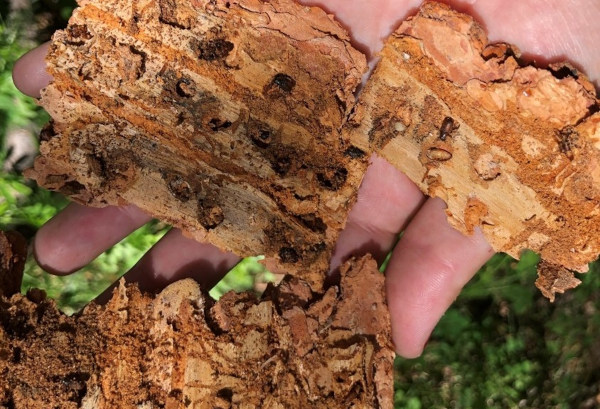
Galleries on the underside of the bark or on the trunk of a tree when the bark is removed may indicate the presence of bark beetles. Photo: CSFS
Woodpecker damage is often an indicator that a tree is infested with bark beetles. The birds will strip portions of the bark in search of larvae, leaving accumulations of bark at the base of the tree. Photo: CSFS
Exit holes on the bark’s surface may be seen after the adult beetles emerge from infested trees. Photo: CSFS
Needles on infested trees typically turn “rust” colored after a short period of yellowish-red coloring. Needles typically drop from branches the second summer after the tree has been infested. Photo: William Ciesla, CSFS
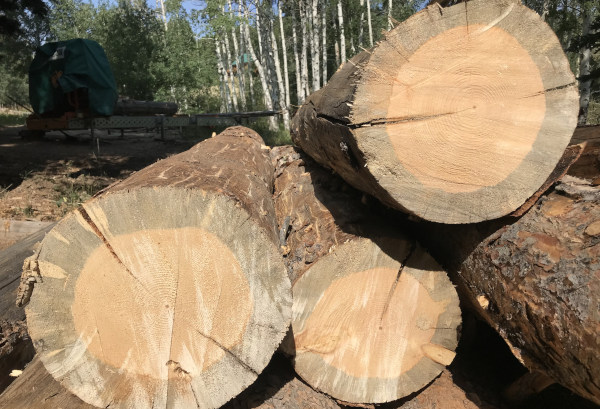
Mountain pine beetles can transmit spores of bluestain fungi when they attack a tree. The fungi grow within the tree and assist the beetle in killing the tree, giving the sapwood a blue-gray appearance. Photo: Teddy Parker-Renga, CSFS