Colorado's Forests
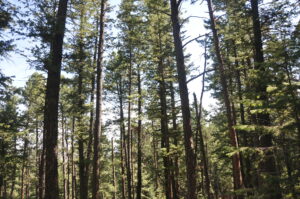
Colorado's forests provide homes for many wildlife species, improve water quality, filter pollutants from water and air, enhance outdoor and recreational experiences, provide wood products, and supply jobs in local economies.
Colorado's forests are expansive, diverse and beautiful. They provide vital shelter for both people and wildlife, improve the quality of our water, filter pollutants from the air, enrich our outdoor experiences, and furnish products and jobs that strengthen local economies.
Colorado's 24.4 million acres of forested landscape are perhaps the most complex of any in the Intermountain West, with a diverse mix of coniferous and deciduous species. The most extensive forest types in Colorado are spruce-fir, ponderosa pine, lodgepole pine, aspen and piñon-juniper.
This vegetative mosaic is a physical landscape that ranges from flat plains and high plateaus to steep mountains, deep canyons and sloping foothills. A wide range of topographical, soil and growing conditions further influence this variety and contribute to the state's multi-faceted forest resources.
In addition to spruce-fir, ponderosa pine, lodgepole pine, aspen and piñon-juniper, forest types in Colorado include Douglas-fir, southwestern white pine, bristlecone pine, limber pine, Colorado blue spruce and the cottonwood-willow combination found in many riparian areas.
- Forest Management
- All About Trees
- Colorado Forest Land Ownership
- Colorado Wildfire Risk Assessment Portal (CO-WRAP) - NEW
- Colorado Wood Utilization & Marketing Program (CoWood)
- Colorado's Forest Types
- Colorado's Major Tree Species
- Community Wildfire Protection Planning
- Condition of Colorado's Forests
- Forest Insects & Diseases
- Forest Restoration
- Post-Fire Rehabilitation
- Programs for Homeowners & Landowners
- Protect your Home, Property and Forest from Wildfire
- Seedling Tree Nursery
- Urban & Community Forestry
- Publications
- Your Local District Contacts