Fire is a natural process that provides ecological benefits. Hazards to life and property exist when a fire occurs and where conditions are conducive for the fire to grow. Land managers and homeowners can take preventive measures to reduce the occurrence of catastrophic wildfires.
Wildfire Mitigation & Management
- 2010 Emergency Supplemental Fund Program
- Protect your Home, Property and Forest
- Community Wildfire Protection Plans
- Post-Fire Rehabilitation
- Fire as a Tool
- Training
- Wildfire Suppression Equipment
- Wildfire Publications
- Wildfire Links
- Current Rocky Mountain Area Fires
- Local Fire Agencies
- Durango Home
Overview
Fire is a natural process that provides ecological benefits. Hazards to life and property exist when a fire occurs and where conditions are conducive for the fire to grow. Efforts to suppress fires are intended to reduce these threats to life and property. The effect of fire on your property is partially determined by what you have done to affect fire's behavior and by what your neighbors have done.
Although we all like to think the fire will be somewhere other than on our own property, fire is a part of forest ecology. It's not a matter of if it happens, but when it happens. Low-intensity fires reduce fuel buildup on the forest floor, thus helping prevent susceptibility to insect infestations and disease outbreaks. Additionally, fire helps recycle nutrients back into the soil and creates a fertile environment for seeds to germinate. Forest fires can enhance wildlife habitat and improve access and appearance.
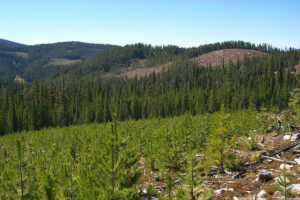
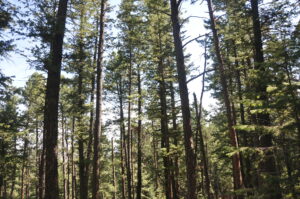
Excessive fire suppression and fuel buildup have negative impacts on forest health and the humans and wildlife that inhabit the area. However, land managers and homeowners can take preventive measures to reduce the occurrence of catastrophic wildfires. Such actions include clearing dead and downed materials, thinning tree stands and removing other hazardous fuels. Allowing naturally occurring fires to burn without interference or applying fire through prescribed burning can help prevent intense crown fires and maintain a healthy forest.
![]() |
![]() |
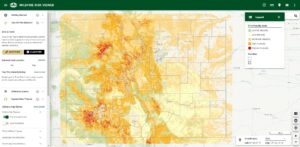
The wildland-urban interface, or WUI, is any area where man-made improvements are built close to, or within, natural terrain and flammable vegetation, and where high potential for wildland fire exists. During the past few decades, population in the interface has increased. Homes, businesses, and subdivisions are being built on forested lands that have historically seen regular fires, and even need them to remain healthy. For a map of Colorado’s WUI area, click here.
Colorado law identifies county sheriffs as the fire warden for their county and the individuals ultimately responsible for controlling and extinguishing prairie and forest fires on private and state lands within that county (CRS 30-10-513 - 14 KB PDF). The role of the Colorado State Forest Service (CSFS) is to aid and assist the sheriff and county fire departments with this responsibility. The CSFS fulfills this role by providing training, equipment, technical assistance and funding and by facilitating interagency mutual aid agreements and annual operating plans.
Emergency Fire Fund (EFF) – This fund, established in 1967 by some counties that recognized that some wildfires may exceed the counties’ resources and abilities to manage. Participation in the EFF is voluntary. Currently, 43 Colorado counties and the Denver Water Board contribute to EFF. A county’s annual assessment for EFF is calculated using a formula based on the acreage of private watershed and the annual property tax valuation. Emergency funding requests must originate from the county sheriff and State Forester approval is required. Once accepted, an EFF fire is managed under the direction of CSFS.
Federal and State Funding Assistance – CSFS is authorized by the governor as the primary point of contact with the Federal Emergency Management Agency (FEMA) when wildfires pose an imminent threat to life and property. CSFS requests, and if awarded funds, administers FEMA Fire Management Assistance Grants (FMAG). FMAGs provide for up to 75 percent of eligible costs in the suppression of catastrophic wildfires.
Wildfire Emergency Response Fund (WERF) – This State of Colorado fund was first designated and funded by the state legislature in 2002. (CRS 23-30-310 - 13 KB PDF). The fund reimburses a fire department or county for the first retardant load on state and private land initial attack fires at the request of the county sheriff, municipal fire chief or fire protection district. In 2006, the legislature expanded authorities in the WERF to include reimbursement of two days of hand crew use with preference to state inmate crews. The goal is to reduce suppression costs by quickly attacking fires quickly to keep them small.
2010 Emergency Supplemental Fund Program
The Colorado State Forest Service (CSFS) recently received funding from the USDA Forest Service and is offering these funds as grants for forest and fuels management projects on non-federal lands. The purpose of the Emergency Supplemental Fund (ESF) Program is to accomplish on-the-ground projects that result in acres treated. Although ESF grants are not intended for individually owned small acreages or subdivision lots, larger projects involving collaborative efforts between landowners, such as through Homeowner Associations, may qualify for the grants.
To learn about program details and determine if you are eligible, please read the following:
- ESF Information Sheet (63 KB PDF)
Those with eligible projects must complete and submit the following ESF Grant Program Application Form to the CSFS Durango District.
- ESF Grant Application Form (83 KB Word doc)
A completed and signed A-ES Form also must be submitted to the district when applying for the grant:
- Form A-ES - ESF/Landowner Assistance Programs Application (45 KB Word doc)
Applications will be reviewed, rated and then forwarded to the CSFS ESF Program administrator for funding approval or disapproval. Grant applications will be processed on a first come/first served basis and will be available until funds are depleted or the program is terminated.
Documentation required from awardees during the project period:
- Form C-ES - Accomplishment Report for Reimbursement (50 KB Word doc)
- Form D-ES - ESF/Landowner Assistance Programs Cost Documentation (45 KB Word doc)
Protect your Home, Property and Forest
Homeowners can take steps to protect their property and help alleviate the spread of wildland fires. Preventive measures include clearing excess fuel, creating defensible space around their homes and using FireWise practices.
Due to the arid climate and fire-dependent forests in Colorado, many homeowners and landowners may be particularly vulnerable to wildfires. It is important to keep this threat in mind when buying or building a home. Two factors have emerged as the primary determinants of a home's ability to survive wildfires: choosing fire-resistant roofing material and creating a wildfire defensible zone. Fire-resistant roofing material should be rated class C or higher when building a home in, or near, forests or grasslands. Avoid flammable materials such as wood or shake shingles.
When creating a defensible zone, choose vegetation wisely. Maintain a greenbelt (irrigated, if possible) immediately around your home with grass, a flower garden and/or fire-resistant ornamental shrubbery. An alternative is rock or other non-combustible material that may be preferable if your home is constructed with wood or other flammable materials. Avoid using bark or wood chip mulch in this zone.
Learn how to create defensible space around your home
Community Wildfire Protection Plans (CWPP)
A CWPP brings together diverse local interests to discuss their mutual concerns for public safety, community sustainability and natural resources.
For more information about CWPPs and local CWPPs by county, click here. For more information in the Durango District area, visit the Southwest Colorado Fire Information Clearinghouse website.
Post-Fire Rehabilitation
CSFS assists affected landowners with wildfire rehabilitation plans following wildfire events. These plans outline structural erosion control measures and suggest needed re-vegetation to assist the land healing process. CSFS also can help conduct a salvage sale of any fire-damaged timber. Many rehabilitation plans are implemented with cost-share assistance.
![]() |
![]() |
Learn more about post-fire rehabilitation
Fire as a Tool
Fire can be an efficient tool to accomplish many landowner objectives including wildlife habitat, range improvement, forest management and wildfire hazard reduction. Landowners often request CSFS assistance to implement an applied prescribed burn that fulfills these land use objectives.

A series of photos taken at a prescribed burn location: before, during (top left to right), and the first, second and third year after the burn (bottom left to right).
Training
Colorado Wildland Fire & Incident Academy
This CSFS-sponsored academy has become the place for Colorado (now national and international) wildfire agencies to receive nationally-qualifying wildfire training.
For more information, please visit our Becoming a Wildland Firefighter web page.
National Wildfire Coordinating Group (NWCG) wildfire courses:
Wildfire Suppression Equipment
Engines
The CSFS has located 140 federal excess property vehicles throughout Colorado. Our fire equipment shop in Fort Collins converts these vehicles to wildland fire engines and provides all major maintenance. The all-wheel drive (4x4 and 6x6) engines are equipped with pumps, 200- or 1000-gallon tanks, hose reels, equipment boxes
and are loaned out to fire departments and counties ready
to fight wildfires.
The cooperator is responsible for minor maintenance and provides small equipment such as hose, nozzles and hand tools. Ten of the vehicles are currently located on the Durango District:
- Archuleta County Office of Emergency Mgmt (2)
- Durango Fire & Rescue Authority (2)
- Fort Lewis Mesa Fire Protection District (2)
- Lewis-Arriola Fire Protection District (1)
- Mancos Fire Protection District (2)
- Pleasant View Fire Protection District (1)
The engines are inspected annually and updated as technology advances and budgets allow. Improvements such as low profile tanks, foam injection systems, compressed air foam systems and multi-fuel engines have made the fleet safer and more effective. State engines, with their fire department crew, are often components of the CSFS-sponsored engine teams used to combat large federal fires throughout the West.
The CSFS also has added state-owned commercial chassis wildland engines to the resource pool that protects life and property in Colorado. Currently, 17 engines are located at CSFS district offices or with cooperators. They serve to bolster local resources and are available to respond to wildfires throughout the state.
All CSFS wildland engines, both federal excess property and state-owned, meet or exceed National Wildland Coordinating Group (NWCG) standards for wildland engine types. Our fire equipment shop fabricates a limited number of custom wildfire engines for those departments unable to obtain this service elsewhere.
Single Engine Air Tanker
CSFS contracts and manages Single Engine Air Tankers (SEATs) during most of the summer fire season. The number and location of SEATs varies throughout the year as fire activity changes. The aircraft are pre-positioned around the state in response to high fire danger in coordination with federal and county jurisdictions. Colorado has found that SEAT aircraft complement helicopters and large air tankers in wildfire suppression. They are well-suited to Colorado’s high elevations, rugged terrain and expanding wildland urban interface.
Fire Equipment
The Colorado State Forest Service is the connection for local and county fire agencies to purchase wildfire equipment through General Services Administration (GSA) contracts. Federal agencies contract with suppliers for fire equipment and the resulting volume provides a savings. The CSFS provides this service for our local fire agencies by using an online internet system. Fire departments also save on Class A foam, which is bulk ordered by the CSFS. Local fire agencies may contact the Fort Collins District office to place a GSA order for foam.