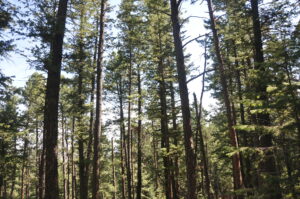
Dwarf Mistletoe
Dwarf mistletoe, a common problem in Colorado forests, predominantly affects ponderosa and lodgepole pines, although they can attack Douglas-fir, piñon and limber pines. Dwarf mistletoes are small, leafless, parasitic flowering plants that kill by slowly robbing the tree of food and water. Damage includes growth reduction, loss of wood quality, poor tree form, predisposition to insect infestation and diseases, premature death and reduction in seed crops.
Symptoms of Infestation
The first symptom of dwarf mistletoe infection is a slight swelling of the bark at the infection site. The parasite is identifiable when the yellow to green or brownish-green segmented shoots protrude from the infected part of the tree, which form about 2-3 years after the infection. Because dwarf mistletoes are slow killers, long-term management options are feasible.
Management Options
- Pruning and removing infected trees is the best management measure available to reduce or eliminate dwarf mistletoe infestations.
- Plant resistant trees under infected ones to replenish the forest after infected ones are removed.
- If planting the same species as the infected tree, use approved sprays to reduce the risk of infestation. (Always carefully read and follow all label instructions before applying insecticides.)
Want to learn more about dwarf mistletoe? Please check out the following documents:
- Dwarf Mistletoe (127 KB)
- Dwarf Mistletoe Poster (239 KB)
- Pages 3 through 12 of the 2005 Report on the Health of Colorado's Forests (7.5 MB)