Colorado's Wildland-Urban Interface
Uncontrolled wildland fire is particularly hazardous in the wildland-urban interface (WUI), areas where human development is close to, or within, natural terrain and flammable vegetation, and where high potential for wildland fire exists.
The wildland-urban interface, or WUI, is any area where man-made improvements are built close to, or within, natural terrain and flammable vegetation, and where high potential for wildland fire exists. Wildfires in Colorado are a natural part of our ecosystems and help restore and maintain healthy forests.
During the past few decades, population in the interface has increased. Homes, businesses and subdivisions are being built on forested lands that have historically seen regular fires, and even need them to remain healthy. In order to preserve human life and property, firefighters have worked hard to suppress and control fires; this has had a negative effect on functioning ecosystems.
To help return forests to a more "natural" state, it is important that land managers and property owners work together. Buildings and the surrounding property should be adapted so that, when fires burn, firefighters can do their job safely to protect man-made structures while allowing fire to take its natural course in the ecosystem. Allowing natural fires to occur will help create a healthier forest and ultimately reduce the risks associated with large and unmanageable fires.
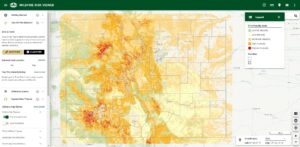
- Colorado Wildfire Risk Assessment Portal (CO-WRAP) - Online Mapping Tool (New in 2013)
- Colorado Wildfire Risk Assessment 2008 (273 KB PDF)
- Colorado Wildland-Urban Interface Hazard Assessment Methodology (137 KB PDF)
- Colorado's Wildland-Urban Interface, Current and Projected Map (321 KB PDF)
- Interface Areas of High Wildfire Risk in Colorado (Red Zone Map) (4.6 MB PDF)