

Healthy Forests Vibrant Communities Report – 2023
2023 Healthy Forests & Vibrant Communities Report
Since 2009, the Colorado General Assembly has supported proactive efforts to enhance the health of Colorado’s forests with a variety of legislative bills, beginning with House Bill 09-119, in support of the Healthy Forests & Vibrant Communities Act. The purpose of this act is to increase the capacity of the Colorado State Forest Service to ensure the long-term health and vitality of Colorado’s forests. It is the role of the CSFS to provide private landowners, communities and partners with the tools they need to address forest and watershed health and wildfire risk to communities and the forests that surround them.
The Healthy Forests & Vibrant Communities Act advances the ability for the CSFS to engage in the following activities:
- Implement forest management and fuels reduction projects
- Reduce wildfire risk to life, property and watersheds
- Assist communities and others to develop Community Wildfire Protection Plans
- Support utilization and marketing of wood products
- Provide loans to forest products businesses
- Develop and update a public website with geospatial data to assist with assessing wildfire risk and project planning
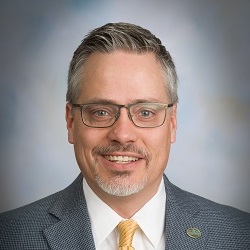
Message from Director Matt McCombs
The Healthy Forests & Vibrant Communities Act is an indispensable tool for the Colorado State Forest Service to address existential threats to Colorado’s forests. Wildfire, climate change, and insects and disease continue to plague our forests; this Act allows the CSFS to face these issues head on in myriad ways, from supporting wood products to sharing geospatial data, and from public education to critical field-based research. I’m proud of the many accomplishments that the CSFS has made to ensure the future health of our forests and watersheds and to empower Colorado residents to do their part in reducing wildfire risk all across the state.
2023 Accomplishments
Healthy Forests & Vibrant Communities funds helped launch these projects last year to protect watersheds, reduce the risk of wildfire and adapt to climate change.
| Project Name | County | Funds Awarded | Matching Funds | Acres |
|---|---|---|---|---|
| Fraser Valley Community & Watershed Protection, Pole Creek Preserve HOA | Grand | $100,000 | $100,000 | 120 |
| Quartz Creek Community Fuelbreak Project | Gunnison | $207,515 | $158,000 | 68 |
| Snowshoe Wildfire Mitigation & Forest Health Project | Jefferson | $87,675 | $87,675 | 100 |
| State Forest Adaptive Silviculture for Climate Change Project | Jackson | $250,000 | $250,000 | 300 |
| Cherokee Park Landscape Scale Fuels Reduction & Forest Management Project | Larimer | $515,325 | $515,325 | 206 |
| Taylor Park Fuels Management | Gunnison | $1,000,000 | $200,000 | 400 |
| Fraser Valley Community & Watershed Protection | Grand | $1,000,000 | TBD | 500 |
| Greater Staunton Project | Jefferson and Park | $1,000,000 | TBD | 578 |
| North Cat 1 GNA & Big Blue COSU | Teller | $1,000,000 | TBD | 435 |
| TOTAL: | $5,160,515 | $1,311,000 | 2,707 | |
Outreach
Assessing Structure Ignition Potential (ASIP) trainings
- 3 sessions: Castle Rock, Granby and Salida
- 103 students
Wildfire Mitigation Guides
- Distributed 9,871 Home Ignition Zone guides
- Distributed 1,042 Spanish language Home Ignition Zone guides (NEW in 2023!)
- Distributed 1,850 Low-Flammability Landscape Plants (NEW in 2023!)
Live Wildfire Ready
In May 2023, the CSFS and a steering committee of partners launched the Live Wildfire Ready campaign to raise awareness among Colorado residents to be prepared for wildfire and inform them on what they can do to mitigate wildfire risk to their life, home and property.
The Live Wildfire Ready campaign showed tremendous progress in its first year, garnering nearly 6 million impressions across a diversity of tools since its launch on May 1, 2023. Nearly all campaign materials directed people to LiveWildfireReady.org, which offers valuable information on wildfire risk, actions to take and resources to explore.
CSFS.colostate.edu
The CSFS website underwent a major overhaul to modernize its appearance and functionality. The updated version launched Jan. 19, 2023. Throughout the year, 327,000 people visited the website.
Colorado Woody Biomass Assessment
The Colorado Woody Biomass Assessment draft will be completed in early 2024. The assessment characterizes and quantifies wood biomass resources across the state using USDA Forest Service Forestry Inventory and Analysis (FIA) data. It also evaluates harvesting, transportation, delivery systems, utilization and markets; energy production technologies; and the social, economic and environmental considerations associated with utilization; and provides procurement and policy recommendations.
Carbon Accounting Framework
The CSFS partnered with the Natural Resource Ecology Laboratory to compile summaries of carbon stocks and fluxes for Colorado forests by forest cover type and county for the period 2011-2020, including current statewide rate of net annual carbon sequestration and emissions. A draft technical report of findings and county-level geospatial products will be completed in early 2024, followed by distribution for review.
Monitoring for Adaptive Management
Monitoring is an integral part of adaptive management. The CSFS developed a monitoring program to learn from forest management actions and their ability to meet stated goals of forest management plans. In 2023, the CSFS monitoring program expanded capacity; purchased drones, GPS units and LiDar equipment; and collected data from both Forest Restoration & Wildfire Risk Mitigation and Healthy Forests & Vibrant Communities projects covering about 2,100 acres, with 450-500 acres representing HFVC projects aimed at protecting the North Catamount Reservoir and surrounding forested watersheds.
The Colorado Forest Health Council is a volunteer stakeholder body whose role is to provide a collaborative forum to advise the Governor, through the Executive Director of the Department of Natural Resources, and the Colorado General Assembly on issues, opportunities and threats to Colorado’s forests. The Council was reestablished during the 2021 Colorado legislative session with 26 members representing all corners of Colorado. The Council’s updated mission includes improving forest health in Colorado through integrated, science-based approaches, with a focus on cross-jurisdictional collaboration among federal, state and local governments, as well as private and nonprofit partners, to reduce wildfire risk, restore ecological resilience, safeguard communities and water supplies, mitigate and adapt to climate change, support local economies and protect recreation areas.
Healthy Forests & Vibrant Communities dollars will go toward the support and creation of a project being led by the Forest Health Council: a Forest Resilience Planning Guide. The planning guide will incorporate the broad expertise and experiences included with the Forest Health Council:
- Purpose: Position all areas and communities in Colorado to better leverage resources, share knowledge and be competitive at receiving funding to achieve effective forest health management and resiliency
- Goals: (1) Provide a starting point on how to access science-based modeling, existing resources and technical capacity, and (2) improve existing processes in pre-fire planning and forest health efforts
- Audience: Targeted at the local government and community-level, while being broadly understandable to a range of stakeholders from the individual to multiple adjacent counties interested in advancing pre-fire planning and building forest health resiliency
Seven wood products businesses and organizations received $1.5 million in financial support under the 2023 HFVC funding. USDA, private and public sector lenders resulted in almost $1 million of additional financial support. HFVC funding supported staffing that assisted in the establishment of the Colorado Mass Timber Coalition and community college forest industry curricula and professional internships in support of SB23-005.
The Colorado State Forest Service released the updated 2022 Colorado Wildfire Risk Assessment (CO-WRA) in July 2023.
- 572 Wildfire Risk Reduction Planner application logins since 2022 CO-WRA release (2,860 total active professional users in the Colorado Forest Atlas)
- 150 CO-WRA risk reports/data exports generated (as of Nov. 3, 2023)
- 8+ webinars and trainings
- Southern Rockies Wildfire Science Network Sessions #1 and #2 (Online)
- CSFS Internal CO-WRA Information Session (Online)
- Colorado Fire Chiefs CO-WRA Presentation (Online)
- Grand County Wildfire Council CO-WRA Presentation (Granby)
- Colorado Outdoor Strategy CO-WRA Information Presentation (Online)
- Backcountry Association CO-WRA Presentation (Highlands Ranch)
- Arvada Fire Protection District CO-WRA Presentation (Arvada)
- National Fire Protection Association (NFPA) CO-WRA Presentation
- 400+ participants trained across 5+ webinars
- 2 conference presentations
- 2023 Colorado Wildland Fire Conference Presentation
- 2023 GIS in the Rockies Conference Poster
The CSFS has increased capacity throughout the agency to provide project and program administration for the activities supported by the Healthy Forests and Vibrant Communities Act.
Looking Ahead
Additional efforts planned for 2024 and beyond include development of a Wildfire Mitigation Outreach grant program, creation of an online grant portal on the Colorado Forest Atlas for state-funded grant programs such as Forest Restoration & Wildfire Risk Mitigation, and hiring additional capacity for cross-boundary project planning and implementation, grant administration, and wood utilization and marketing program support.