Colorado State Forest Service

The mission of the Colorado State Forest Service is to provide for the stewardship of forest resources and to reduce related risks to life, property and the environment for the benefit of present and future generations.

Managing Lodgepole Pine Forests in the Wildland-Urban Interface

The Y Fire in Grand County occurred in mountain pine beetle-impacted stands of lodgepole pine. (photo courtesy of Paul Mintier)

The 2007 Y Fire in Grand County occurred in mountain pine beetle-impacted stands of lodgepole pine.
(photo courtesy of Paul Mintier)

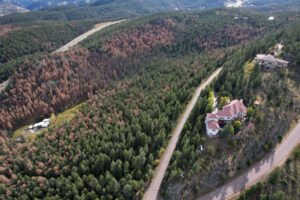
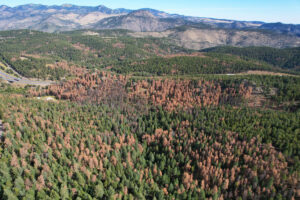
The ongoing mountain pine beetle epidemic is heavily impacting lodgepole pine forests in Colorado, resulting in high mortality in these stands. This mortality is changing forest structure and composition, and modifying fuels in ways that will affect fire behavior for decades.

Wildfires in Colorado are a natural part of our ecosystems and often help restore and maintain healthy forests. However, many forested lands that historically and regularly experienced fire can no longer be allowed to burn due to the growing populations within the wildland-urban interface (WUI) where human-made improvements are built close to, or within, natural terrain and flammable vegetation. A significant potential for wildland fire exists in the WUI when mountain pine beetles are added to the equation.

As a consequence of the current epidemic, many landowners and land managers are concerned about how to actively manage lodgepole pine stands to treat the dead standing trees killed by the insects; protect homes and communities in the wildland-urban interface from wildfire; and ensure that the future forest is better structured to prevent widespread mortality from insect epidemics and wildfire.

A recent report titled Lodgepole Pine Management Guidelines for Land Managers in the Wildland-Urban Interface discusses management recommendations for this forest ecosystem. The document applies to lodgepole stands in the WUI prior to, during and after a mountain pine beetle attack.

Read more in the report...